
Do Not Read This Blog
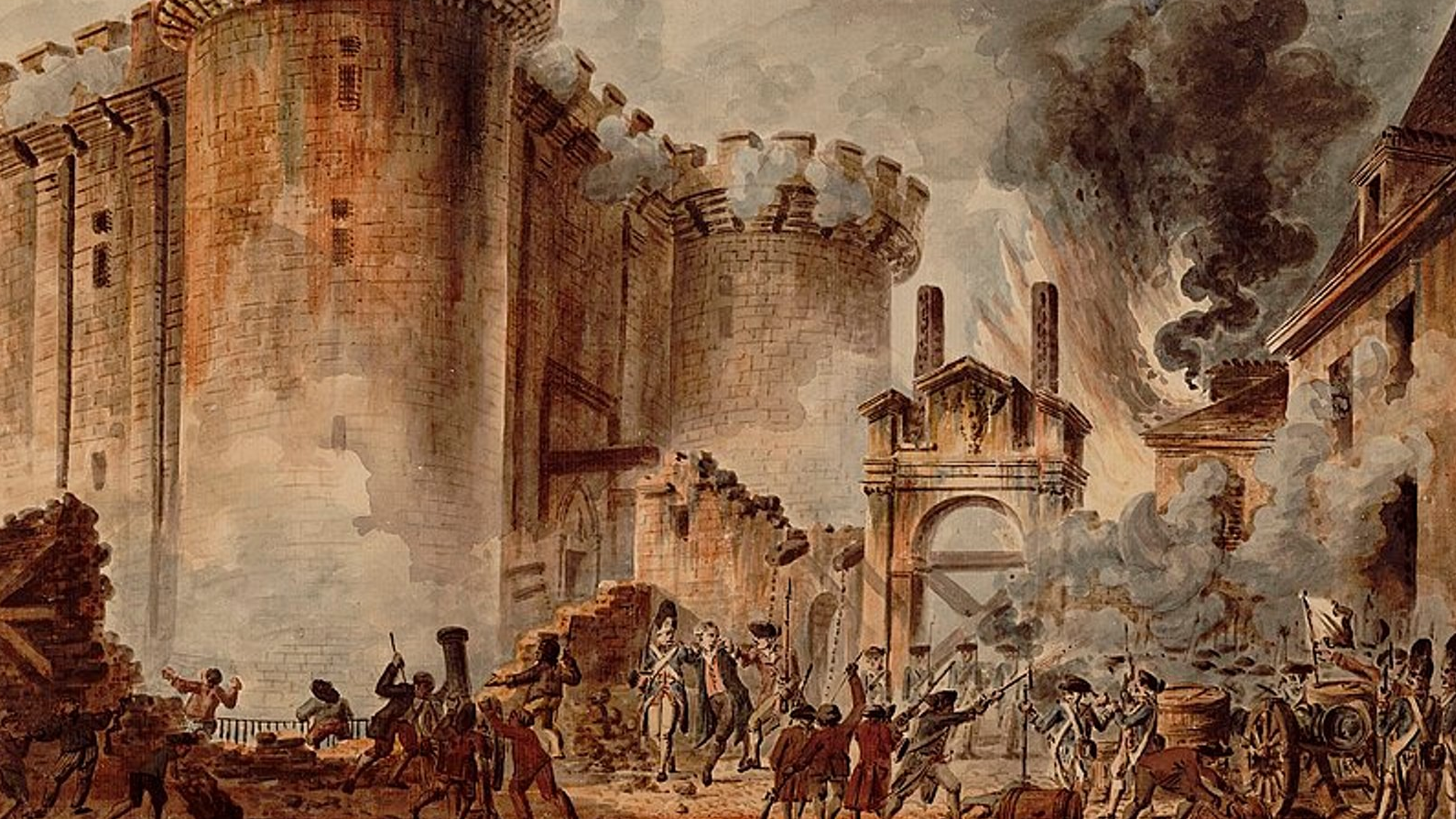
Jean-Pierre Houël: The Storming of the Bastille
"Freedom is what we do with what is done to us." — Jean-Paul Sartre
Psychological reactance theory (PRT) proposes that when something threatens or eliminates people’s freedom of behavior, they experience a motivational state that drives freedom restoration, this is called psychological reactance (Rosenberg, B. & Siegel, J. 2018). Jack Brehm, the creator of the theory, devoted himself to understanding the affective processes that urge us to act in the midst of a threat to our autonomy. Research using the framework and theory Brehm gave the world has flourished in the last 50 years; subfields such as social and clinical psychology have used PRT to explain behavior all over the world. Seeing that you read this far may even be attributed to this article's title directing you to not read it; its infringement on your perceived freedom and your reaction to go against its demand lead to you getting this far, adding to the relevance of the theory. This blog post will go into detail of how the theory is present within individual, group, and societal domains; making known the many circumstances that can bring about the powerful motivational consequence of depriving people of their subjective sense that they are free agents (Wright, R. Greenberg, J. & Brehm S. 2004).
What is Freedom?
“The only way to deal with an unfree world is to become so absolutely free that your very existence is an act of rebellion.” — Albert Camus
Freedom, as Brehm described it, is fundamental to our survival. Our freedom gives us the ability to adapt to any situation far more than any object or tool could (Wright et al. 2004). The ability to make a choice or action uninhibited by outside determinants allows people to meet their changing needs and ultimately survive. The attractiveness of alternative choices or decisions in different situations is also often equated to the importance of freedom, the more attractive the end goal, the more important the freedom. Brehm and Brehm (1981) also related freedom to control, they thought of control as encased in our free behaviors. If a free behavior was eliminated, the freedom is not only taken away, but so is the individual's control over outcomes. This emphasized the importance of control when examining the conditions that lead to reactance (trying hard to re-gain freedom) and those that result in learned helplessness (not trying after many failed attempts). Furthermore, the ultimate utility of control is theorized to equal predictability and security. According to PRT, individuals learn what their freedoms are (and are not) through experience, or by what they're told by a powerful other (such as the society they're a part of). Despite the restrictions imposed on one through local laws, the motivation to secure freedoms that can be used to gain control over outcomes is not lost on the individual. One may never know when the freedom to say no, own a gun, or get educated, may be necessary to preserve the comforts of their existence. Because of this, the fantasy of what is perceived as a “more-free” society is always in the back of the minds of the citizens of a state. The allure to create or move to such a fantastical society, especially when they perceive their freedoms now as threatened, can create a volatile state of reactance sparking revolution.
Reactance and the Individual
Rather than a personality trait, reactance is a motivational state.
The psychological theory of reactance is very relevant to theories of problems and theories of change, the two main pillars of research in clinical psychology. The construct of reactance has caught the interest of many clinical researchers since its conception, some of which portray it more as a personality trait rather than motivational state (Wright et al. 2004). The issue with this is that the interpretation arguably doesn't do justice to what Brehm had in mind when coming up with the theory. Reactance is not a stable trait, it’s a volatile motivational state that begets action in the face of a threat to one’s freedom. Given this definition, reactance is better explained as a mediator or moderator in clinical literature. As a treatment moderator it can explain how certain clinical settings can provoke a heightened state of reactance if the client feels that their freedom is being taken from them, like with court ordered interventions or institutionalization. As a mediating variable, reactance can explain how repeated attempts to solve a problem can turn ironic by keeping the problem going or making it worse (Wright et al. 2004). For our blog, we will discuss PRT as a mediator and give an in-depth look into the mechanisms behind the vicious cycle of substance use and possible interventions.
Reactance as a Mediating Variable in Addiction
The state of reactance is often inadvertently induced, prompting a cycle that is difficult to break. Substance use can often provide a private yet abundant context for such cycles. People are more likely to try to restrict someone's behavior when they perceive the behavior (like illicit drug use) as destructive, even if that very behavior was perceived by the user as a legitimate choice. When the perceived freedom is threatened, an aroused state of reactance is provoked, and the individual may double down on their maladaptive behavior to restore their freedom. This then leads to more attempts at stopping them, and more usage due to them trying to keep their free behavior. This is known as a vicious cycle (Chokshi, D. 2023), which is a pattern of entrapment in externalizing addictive behaviors. This can involve problematic use, attempts to quit, and subsequent strengthening of the desire for the vice due to others threatening to eliminate their freedom to use. While reactance alone is not responsible for keeping someone addicted, the psychosocial influence of others taking away what you perceive as a freedom can hypothetically be a significant mediator in the ironic processes of problem maintenance and change (Wright et al. 2004).
How does one intervene when psychic forces are at hand? The answer is through paradoxical intervention. This model of therapy refers to therapeutic tactics that have the common denominator of attempting to change by discouraging it. These paradoxical interventions aim to contradict the goals they are designed to achieve (Omer, H. 1986) The most common type of this intervention is called the strategic systems approach; in this approach the therapist prescribes the very behavior the client complains about (Wright et al. 2004).
- Strategic systems approach
- Is a defiance based paradoxical interventions - therapists limit a client’s freedom to not engage in symptomatic behavior and as such, expect the clients to do the opposite as what is proposed.
- This modality maximizes defiance by giving a minimal rationale (“we need you to do this for diagnostic purposes”) or by framing suggestions in a manner inconsistent with a clients view of themselves or the problem.
The antithetical modality would be Cognitive behavioral therapy (CBT). In this type of intervention, the goal is symptom remission. This is achieved through trying to change the clients' maladaptive behaviors and thought processes while providing clear intentions and goals for the client.
- Cognitive behavioral therapy
- Paradoxical intention - aimed at interrupting within-person exacerbated cycles.
- Maximizes client’s compliance by giving them an explicit rationale for the prescription.
Due to the idea that what brings about a state of reactance is highly variable depending on the individual, some paradoxical interventions work, and some do not. Defiance based interventions like the strategic systems approach is best for those who perceive their target behavior as a free choice. When the situation is seen as free, the volatile nature of the outcome creates significant reactant potential that acts as a catalyst for change. Compliance based treatment like CBT works best for those who perceive their target behavior as unfree. Since the individual sees their behavior as out of their control (possibly due to learned helplessness), the reactant potential is low. Thus, those with behavior they see as out of their control can benefit from the explicit rationale for treatment.
Reactace Theory and the Group
Seeing that one's freedom is often granted by the overseeing group, the free behaviors start to serve as a linchpin in the relationship between the individual and the group. The promise of freedom equates to a promise of control and stability. That's why the idea of the American dream is so alluring (pursuit of happiness, religious freedom, free market). Freedoms or free behaviors can add to the uniqueness of the individual and make them feel more fulfilled when identifying with these behaviors. Although most think freedom is such an innate function of society, it balances on a thin line within groups, states, and inter-state interactions. Given that individual-group dynamics have been defined as the foundation of culture (Wright et al. 2004), the relationship between the two is best examined by discussing freedom, as it is essential for our physical and psychological need for security.
Reactance Theory Applied to Politics
“By what standard of morality can the violence used by a slave to break his chains be considered the same as the violence of the slave master?” — Walter Rodney
Moreover, political landscapes are profoundly impacted by reactance theory. Impositions of rigid regulations or mandates without allowing for individual agency can trigger resistance among the population. This resistance can manifest through protests, civil disobedience, or even widespread movements aiming to restore perceived infringed freedoms. Reactance theory provides insight into why certain policies may face staunch opposition, highlighting the importance of balancing governance with the preservation of individual freedoms. Individuals in a group gain a shared sense of identity which results in increased uproar due to their perceived anonymity within the group. By operating under a ‘Unified identity’ individuals can accomplish much larger goals (Reicher et al. 1984). When societal conventions encroach upon personal freedoms or dictate behavioral standards, individuals may rebel against these societal norms that often fall under the purview of reactance theory. This rebellion can lead to the emergence of countercultures, alternative lifestyles, or subversive movements seeking to reclaim autonomy and challenge established societal standards. Erika Apfelbaum (1999) discussed how power and dominance play a role in relations between groups. Giving further insight into the essence of group dynamics, Apfelbaum explained that the possession of power allows a group to become dominant and determine the free behaviors of a subordinate group. Over time the subordinate group will lose their autonomy and adopt the standards established by the dominant group, the group without power is then at risk of losing their identity. The societal standards of the dominant group soon become the norm even if they don’t serve everybody. With that being said, a state of reactance is often provoked by group conflict, this can lead to a lasting struggle for their perceived freedoms.
A prominent example of reactance theory playing out in the real world is through the Israel-Palestine conflict. Israel being a wealthy-settler-neo-colonial state has taken control of Palestinian land and continues to do so to this day. Backed by numerous core states such as the U.S. and Britain, Israel actively impedes on the freedom of Palestinians by creating the apartheid state known as the Gaza Strip. This conflict has led to a volatile situation primed with high reactant potential due to Palestinians not wanting to be pushed out of their ancestral lands. As defined by reactance theory, the bigger the threat to freedom the larger the degree of reactance will be taken to regain said freedom. From our privileged position in the U.S. its easy to see conflict and condemn violence, but that take lacks nuance and is uninformed. Considering the unequal power dynamics at play it is then easy to see how what we perceive as drastic measures will be taken by those who are powerless in the conflict. “The oppressor will always be demonized for resisting the oppressor,” knowing this to be true we must ask ourselves who does my viewpoint benefit? Once one becomes critical of neo-liberalism and the plight of developing countries facing imperialism, you have opened the door to many sad yet rich examples of reactance theory in the real world.
Reactance Theory Applied to Media & Society
Culture is said to be the result of individuals’ interactions with the group. Seeing that the interplay between them can often cause a high potential for reactant energy, how does it play a role in consumer behavior on a cultural scale? In the realm of consumer behavior, reactance theory plays a pivotal role. Marketing strategies often encounter this phenomenon when attempting to persuade individuals to adopt certain products or behaviors. When consumers feel coerced or pressured into making specific choices, they may exhibit resistance, leading to the rejection of those products or ideas. Advertisements employing overly forceful language or attempting to dictate consumer preferences often trigger reactance, prompting individuals to seek alternatives or even boycott the product or brand. Another way that reactance is present in marketing strategies is the purposeful limiting of certain products to elicit reactance from consumers.
In one of Brahms's earliest studies on reactance theory, he made participants listen to the same record four times. Participants in the first session of the study listened to and evaluated four phonograph records. At the second session, participants were told that they were going to listen to the same four records, evaluate them, and choose one to keep. Prior to listening to the records during the second session, one group of participants was informed that one of the records was no longer available because it was missing from the shipment. In each case, the record that was reported as unavailable was the one that was rated as the participants' third choice. As reactance theory predicts, the third-rated record increased in attractiveness because of one becoming unavailable. Sixty-seven percent of those participants who had their third choice eliminated raised their evaluation (Lessne, Greg, and M. Venkatesan 1989).
Understanding reactance theory offers insights into navigating societal challenges effectively. Policymakers, marketers, educators, and leaders can benefit from this understanding by crafting strategies that respect individual freedoms while achieving collective goals. By acknowledging and accommodating the inherent need for autonomy within society, institutions can foster a balance between control and freedom, ultimately contributing to a more cohesive and adaptable society.
Conclusion
In conclusion, reactance theory serves as a lens through which to comprehend the intricate dance between individual freedom and societal control. Its applications in consumer behavior, politics, groups, and in individualistic areas underscore its relevance in understanding and addressing societal behaviors and responses. Embracing this theory encourages a nuanced approach to governance, marketing, and societal norms, promoting a coexistence that respects and safeguards individual autonomy within society.
References