
Group Dynamics: A Motivational Discussion
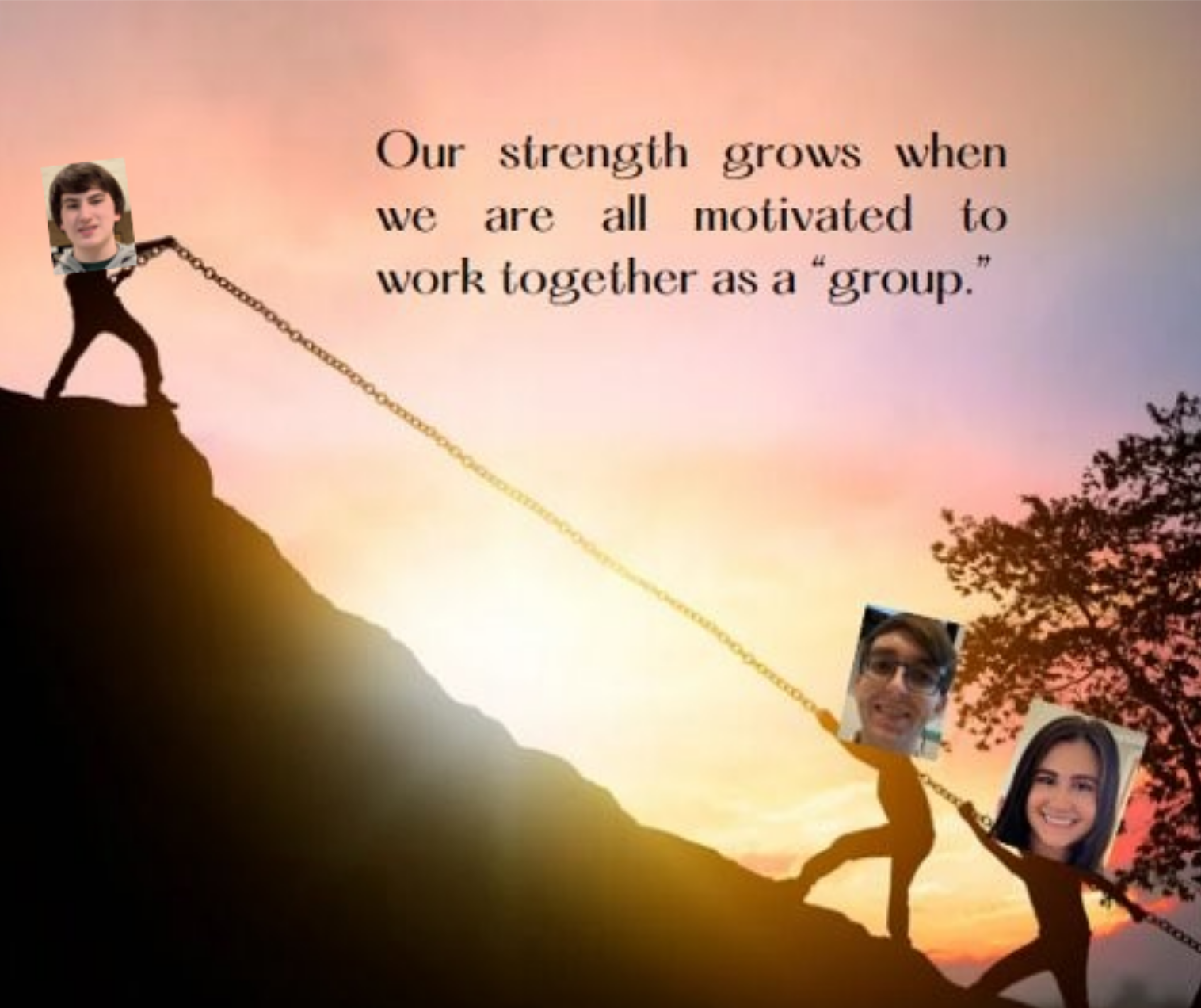
Humans are social animals. It is in our nature; there is no denying it. Unless you are a part of the small subset of the population that thrives on self-isolation, there is a good chance you need to rely on others to help you accomplish many things in your life. Your colleagues collaborate with you at work, your family (whether helpful or not) gives you advice at home, and your classmates support you at school. These instances rarely occur in isolation. You might be a member of a group or even the leader, but regardless, working in a group comes with its own unique challenges and expectations. Because of this, understanding group dynamics is essential for achieving the best results for a marketing project, home chores, or a graded assignment. In this blog, we hope to explain how group dynamics work, how they are formed, and the various problems (or solutions!) that may arise from individual contributions.
Human behavior already encompasses a complex area of psychological research, but when multiple human behaviors interact, it is a totally different story. Our goal is to highlight some of the major strategies in which individuals collaborate and inform our audience of the motivational tactics surrounding group dynamics. We are optimistic that by the end of this article, our readers will be able to expand their knowledge of group dynamics in educational, industrial, social, and political settings. We will summarize these perspectives into five main points, beginning with an introduction to group dynamics.
1. Group Dynamics are as Intricate as the Individuals that Encompass it
Group dynamics are the collective interactions, attitudes, and behaviors that influence how individuals in a group work together. Positive group dynamics can promote creativity, innovation, and collaboration. Negative group dynamics, on the other hand, can lead to conflict, stress, and inefficiency. Bruce Tuckman developed four stages of team development that portray how various attributes may erupt which include forming, storming, norming, performing, and if in an academic environment, termination/ending (Kumar et al., 2014).
The first stage, forming, is where group members experience excitement and eagerness about the upcoming task at hand. This stage entails creating a team with defined goals and expectations for the team’s end goals. The second stage is storming, where the team begins to work towards their desired goals. Here is where members start to think that the team may not live up to their expectations. Often, members in this stage begin to realize how their team will respond to difficulties, conflicts, and inter-member differences. Further, the norming stage is where team members begin understanding that their differences help them become stronger collectively. This stage is marked by an increase in productivity and more acceptance of team members (Kumar et al., 2014).
Fourth, in the performing stage, members become satisfied with the team’s progress and begin to realize that their group is greater than the sum of its parts (Kumar et al., 2014). Finally, most groups in the academic setting experience the final stage of this theory, termination/ending. In this stage, teams often focus on three tasks: completing any remaining work, evaluating the team’s progress, and acknowledging the group’s accomplishments. Although this stage can bring up feelings of anxiety and uneasiness about the future, all group members must realize how their team has succeeded in doing what they hoped for and implementing successes into future groups.
2. Industrial and Organizational: Teamwork Makes the Dream Work
Mainly used for understanding job performance and group dynamics related to the workforce, Herzberg’s Two-Factor Theory (also known as Motivation-Hygiene Theory), states that there are two primary sets of factors that influence one’s job performance: motivation factors, which are intrinsic to the self, and hygiene factors, which are extrinsic to the self (Alshmemri, Shahwan-Akl, & Maude, 2017). First developed in the late 1950s, this theory may seem only applicable to the workplace, but it extends far beyond that.
Motivation Factors, as described by Herzberg, are intrinsic to the self. For instance, factors such as the possibility of advancement and growth, the work itself, feelings of responsibility, and gaining recognition can lead to feelings of satisfaction with the job, while their absence results in no satisfaction. On the other hand, Hygiene Factors are extrinsic to the self. Examples include interpersonal relationships with coworkers, one’s salary, working conditions, relevant policies, and administration (Alshmemri, Shahwan-Akl, & Maude, 2017). When these factors are present, the outcome is no job dissatisfaction, while when absent, they result in dissatisfaction with one’s job.
Although relevant to the workplace, these factors can also be related to group dynamics outside of work. For example, one’s motivation to work efficiently on something is, in part, determined by whether the work at hand is too challenging or too easy, or exceptionally interesting or plain boring. Responsibility also plays a significant role. When an individual is given responsibilities and the freedom to make decisions, it is understood that their motivation to work well increases and satisfaction ensues. Interpersonal relationships additionally play a role in understanding how much one enjoys or is motivated to work. For instance, if an individual does not like working with their group or dislikes the project being worked on, it is reasonable to assume that their motivation to work with group members will drastically decrease, and they will be dissatisfied with the work (Alshmemri, Shahwan-Akl, & Maude, 2017).
3. Collaboration and/or Conflict in an Educational Setting
Despite the resourcefulness that transpires between individuals in a group, there are also challenges that the dynamic may face based on the roles assigned to by members of the group (Karau & Hart, 1998). Current research is being conducted to try to eliminate “social loafing,” or the process where individuals exert less effort on collective tasks. Fifty-one dyads (a pair of individuals in an interpersonal situation) in an older study discussed a controversial issue in which they agreed strongly (high cohesiveness), disagreed strongly (low cohesiveness), or disagreed mildly (control), then worked collectively on an idea-generation task. Members of low-cohesiveness and control groups engaged in social loafing, whereas members of the high-cohesiveness group worked just as hard collectively and cooperatively. Essentially, if there is a motivation factor present, then there is a decrease in social loafing.
The research indicated that group cohesiveness can eliminate social loafing when individuals’ efforts are seen as useful and important to a valued group performance. For example, if a group of students are given a psychology paper to complete in a month, it is highly likely that social loafing will occur given the period. However, this ideology can be decreased if an individual’s internal motivation overpowers their attitude of social loafing. This can be done by assigning certain tasks to individuals to establish accountability, using a thoughtful grouping strategy based on individual interests, or generating a peer-evaluation form to objectively identify those who are not fulfilling their responsibilities on the paper.
4. Social Motivation due to Emotional Similarity
Recent research has found that when individuals work together in a group, they bring different emotions to the table, and sometimes, group members’ feelings differ from one another (Choi, 2023). Because of this, it is known that individuals who share similar emotions often collaborate better together and for longer compared to individuals in groups that have conflicting emotions. Positive group members tend to have a strong work ethic and put forth effort into the group, often resulting in all members having an increase in motivation to complete tasks, more task completion, and a greater enjoyment of completing the tasks. In terms of a specific social situation, some individuals may decide to join a book club because of the joy that reading gives them. They will be much more motivated to continue coming to the book club each week if others at the event share the same love of reading as them which in turn may lead to new friendships, skills, and hobbies. On the other hand, groups that have emotionally dissimilar members, that is, members that do not share similar emotions towards the group suffer from more undesirable consequences; these individuals may have a more challenging time collaborating with other members, completing tasks, and enjoying the work they are doing. If an individual goes to a book club and meets a group of people who would rather play violent video games than converse about a romance novel, they would most likely not be as motivated to go to subsequent meetings.
Socially Shared Learning
Socially shared learning is a collaborative process in which group members combine their ideas, knowledge, skills, and understanding by engaging with others in a social setting. Though it sounds simple enough, the process of sharing the learning can be difficult for many reasons that can be both internal and external. Internally, the group mates must be open to the process for it to be an effective learning tool. Socially shared learning is often imposed upon people, such as students. Since not everyone is comfortable in social settings, the forced nature can cause people to feel extra pressure, leading to problems for the individual and affecting the group's efficiency. External factors can also have a drastic effect on the group, such as the availability of group members and how they communicate. Despite living in such a digitally dominated age, getting the group together under one roof, albeit online or in person, can be a massive struggle. This can quickly result in the group’s progress being hindered, leading to a drop in motivation overall.
To better understand oneself and how to act properly in a socially shared setting, scientists have developed several strategies that anyone can use. One of the most effective is known as motivation regulation, which is described as “the activities through which individuals purposefully act to initiate, maintain, or supplement their willingness to start, to provide work toward, or to complete a particular activity or goal” (Jarvela, Jarvenoja, & Veermans, 2007, p. 124). The ability to regulate motivation in a social setting can be applied, both to the individual and the entire team, using a few techniques. One way is through goal-oriented self-talk, which relies on the members discussing their shared goals through their desire to complete the task at hand. This strategy can be enhanced through other means, such as interest enhancement, which aims to increase the level of immediate enjoyment that the group gets out of working together, and through environmental structuring, where the members take time to eliminate any potential external distractions (Jarvela, Jarvenoja, & Veermans, 2007). For instance, if a group of individuals are working together to complete a massive semester-long project, it can be reasonably assumed that this group will experience some bumps in the road. However, if they discuss the tasks at hand, work through them, and realize how they can overcome these challenges, they can dissipate these obstacles and work together to complete their project.
5. Relevance in a Persuasive Political Environment
The relevance of group dynamics expands far beyond a social and educational perspective, especially in terms of occurrences that affect our daily lives and freedoms. On January 6th, 2021, a large group of individuals stormed the United States Capitol building in hopes of decertifying the 2020 election. This event led many to wonder, “How could this happen in one of the longest-lasting democracies in the world?” Well, to explain this, psychologists examine the role of group dynamics in how these seemingly average individuals could have come together to partake in an event that would go down in infamy (Hinsz & Jackson, 2022).
First, psychologists examined the role of group polarization; essentially, this is the tendency for group members to become more extreme in the direction initially favored by members. For instance, individuals who already believed former President Donald Trump had the election stolen from him would only have that belief cemented when discussing it with like-minded individuals. Second, Social Identity Theory (SIT) states that we, as humans, categorize ourselves and others into specific groups that envelop our self-concepts (i.e., far-right, or far-left groups, never Trumpers, only Trumpers, etc.) (Hinsz & Jackson, 2022).
Finally, the last proposition proposed by SIT states that (a) because people are motivated to have positive self-regard, and (b) ingroups (i.e., the groups we are a part of) are part of the self, then (c) individuals are therefore motivated to see their ingroups positively (Hinsz & Jackson, 2022). For instance, Republican pro-Trump group members often see their group as brave, patriotic, and fighting to save the country from socialists who intend to erode democracy as we know it. Indeed, it is evident that group dynamics played a significant role in this day that will go down in United States history and that these like-minded individuals came together to accomplish a common goal: prevent the certification of the 2020 election, solidifying Donald Trump as President of the United States. Thus, it is evident that group dynamics are extremely powerful as they can act as an elaborate motivational stimulus for team performance.
The Lasting Influence of Group Dynamics
By understanding these five main points, individuals can create a positive group dynamic and enjoy the benefits that result from teamwork. These aspects can, therefore, be applied to educational, social, industrial, and tumultuous political environments. Whether you are working in a class-related group, working with coworkers, or trying to understand the motivation behind political acts, group dynamics clearly influence all aspects of group work. After all, teamwork, according to research, does make the dream work!
References