
Introverts and Extroverts
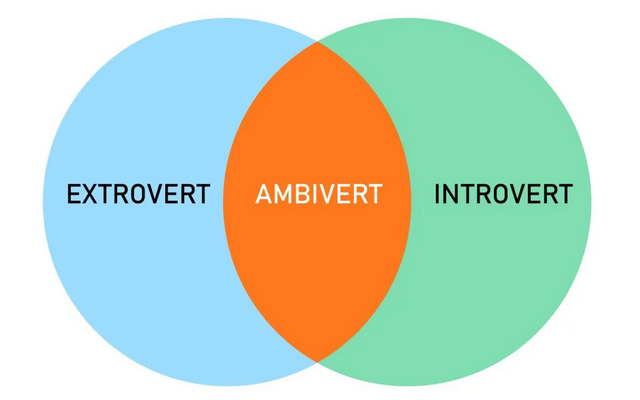
Photo from Adobe Stock
Our study aimed to analyze whether introverts and extroverts are comfortable within different social situations and settings. In this study, we examined past research studies to support our own work. We hypothesize that introverts are less comfortable in more social situations than extroverts.
This first article is about whether social support, loneliness, and connection differ with happiness according to people who are more introverted or extroverted. The data was collected from Canadian citizens that were at least sixteen years of age and were discovered online during Covid-19. The social health measures included, “Perceived social support, loneliness, social network size, and time with friends.” (Card & Skakoon-Sparling, 2023). There were exactly 949 participants, of which the results suggested that lower levels of social loneliness, and higher levels of social support from friends and family, were best correlated with subjective happiness in people who were lower on the extrovert scale. According to the article, “People with higher extraversion have been shown to be more averse to aloneness; to respond to social stimuli with greater attention, reward, and positivity; and to have greater social capital and support compared to people with higher introversion.” (Card & Skakoon-Sparling, 2023). However, this article contradicts the assumption that individuals with higher introversion have better managing skills during pandemic-related situations because they need less social support and are less subject to loneliness. In fact, both introverts and extroverts are vulnerable to loneliness and decreased social connections. This article ties into the next article by explaining the various levels of happiness of introverts and extroverts, which includes characteristics of extroverts and how differently they enjoy social situations.
This second article explains some of the possible characteristics of extraversion, which includes enjoying social situations. This is considered under the effect of reward tendencies and the feeling of pleasure (Lucas & Diener, 2001). Three studies were conducted with two different sets of stimuli to analyze certain differences between extroverts and introverts. Participants were asked to rate themselves as either social or nonsocial, and whether their experiences were “very pleasant, moderately pleasant, moderately unpleasant, or very unpleasant” (Lucas & Diener, 2001). Results showed that extroverts rated their experiences of social situations more positively than introverts, but only when their experiences were pleasant (Lucas & Diener, 2001). Extroverts also rated nonsocial situations more positively than introverts, but only when the experience was pleasant (Lucas & Diener, 2001). Therefore, the level of pleasantness of a situation was more significant than whether the event was social or nonsocial (Lucas & Diener, 2001). This article may help personality theorists discover correlated traits between extroverts and introverts. However, there are many contradictory studies that have analyzed different traits within these two personality types, which makes it difficult to narrow down. This article connects to the next article by explaining how differently extroverts feel about social situations, and then how much they can expect, memorize, and analyze their social interactions.
This third article focuses on whether extroverts and introverts have different “expectations, recall, and evaluation” of their social interactions (Graziano, Feldesman, & Rahe, 1985). Participants were chosen and placed into two groups, which were determined with the Eysenck Personality Questionnaire (Graziano, Feldesman, & Rahe, 1985). Two studies were conducted; Study one consisted of 102 male undergraduate students, and the second study included 61 undergraduate students (Graziano, Feldesman, & Rahe, 1985). The first study had the students evaluate games on rating scales, and the results showed that they believed competitive games are more arousing and punishing than cooperative games (Graziano, Feldesman, & Rahe, 1985). However, the introverted students had already predicted this beforehand. In the second study, the students were told they would participate in competitive or cooperative games, but they were also shown who their opponents would be, as well as random biographical information about them (Graziano, Feldesman, & Rahe, 1985). They were then asked to recall this information about their opponents and evaluate each by rating them with scales. Results showed that the introverted students remembered more about their opponents than their own teammates (Graziano, Feldesman, & Rahe, 1985). The introverts also rated these social situations in less positive ways for the competitive games, and the extroverted students had opposite reactions (Graziano, Feldesman, & Rahe, 1985). Therefore, both extroverts and introverts will rate more cooperative interactions more positively (Graziano, Feldesman, & Rahe, 1985). However, more competitive interactions will be rated as even less pleasant by introverts than extroverts (Graziano, Feldesman, & Rahe, 1985). This is because cooperative situations may be more rewarding and have less risk of negative social interaction. Competitive situations may have more of a risk for negative social interactions, which is why introverts tend to avoid these situations.
Nevertheless, the appeal of extraverts and introverts depicting differences in happiness, social interactions, expectations, and so forth broadly overlook the central outlook on the two separate groups which is their performance level in certain situations, settings, and freedom of choice. Within this study two theories based on Introversion and Extraversion along with the concept of anxiety were determined by an experiment independently. With Eysenck’s and Spencer-Taylor criticizing each other’s theories for past measurements on the subject to leave with negative results. In this experiment the fifty-six participants went into two groups for anxiety patients going into surgery and nonanxiety patients recovering after the procedure. Therefore, leading these two groups to split into four individual groups of introversion and extraversion with one anxious and non-anxious. “The objectives of the present study are to vary the effects of anxiety and introversion independently of each other,” (Sweetbaum, pg.2). According to Spencer-Taylor hypothesized introversions serving a higher anxiety during intense situations while Eysenck determined a constant effect of anxiety during these stressful situations. It parallels one another in having either group develop anxiety effects, after the experiment to detect a proper response from extroversion and introversion individuals. Overall, the theories would be contradicting to one another it shows the dependence the two effects have on each other in specific stressful situations.
In the previous research presented the focus of the study was to have extraverted and introverted groups handle busyness to manipulate their cognitive state on improving or failing in shifting their attention to better their state of mind. Which in this study the participants were interviewed separately to understand the awareness of reliability, convergent, and discriminant validity. To further the research based on previous studies beforehand that social desirability to perform well under pressure. Which in our study is to observe the mindset of an extrovert or introvert to see their performance in certain situations based on our questions. Additionally, the article states that participants that stem to complete a familiar or unfamiliar task can be achieved by the standard motivation based on self-preservation and mental resources applied, “If people are under a heavy cognitive load, their ability to convey an image that is out-of-character or unfamiliar will be hindered, whereas images that do not require much cognitive effort to convey (i.e., in-character roles) may not be affected by additional cognitive tasks,” (Pontari, 2000). The results concluded that extraverts appear more introverted than introverts to be more in persevering cognitive control. It is apparent that extraverts are conservative in specific areas of analyzing a specific situation while introverts are aware of choosing an open mindset. Whereas the interview performed by one of our researchers' candidates had appeared as an introvert in their ability to be outgoing and optimistic in certain situations when asked on their response. Which goes to show the opposite responses differs not based on stigmas but rather on one's comprehension of adjusting to conversation, environment, or social stimulations.
This study is about the influence of friendships that develop extraversion along with interactions that individuals are selective of their friend group. In our study we did ask the interviewed candidate to answer questions based on their past experiences interacting in private and public conversations and events to interpret their response. The results predicted a higher likelihood of friendships lasting over a four-year time span based on sample one measuring friendship networks and sample two measuring bonding mechanisms to interpret co-dependent extraversion developments and friendships. This study is like our methods of procedures in asking questions to the interviewer about their relations with others, comfort in public spaces, etc. to comprehend connection as an extravert or introvert. The prediction of results did resemble our hypothesis that extraversion is higher degree in certain areas such as, social behavior, physical comfort, cognitive awareness, and so on. Furthermore, the study shows two samples, with two different procedures to analyze extraversion and introversion in a manner of converting with stimulus to improve one’s lifestyle in many ways.
In this article, the author highlights the connection between neuroticism and extraversion and introversion. Within this article, the author provides evidence and research that proves the link between mood stability and the type of personality being studied. Throughout this article one of the key concepts is social anxiety and depression being common within extraversion, (Naragon-Gainey et al., 2014). In this study, the amount of anxiety and social anxiety symptoms are observed in the belief that there will be a connection with introversion and extraversion. “The symptoms were studied and observed from the study with self-report,” (Naragon-Gainey et al., 2014). In this study, 826 participants took and assessment of “treatment.” This treatment included self-questionnaires and interviews regarding the participant's mental state. The data collected from the study showed many participants exhibited clinical disorders such as social phobia, major depressive disorder, anxiety disorders, etc., (Naragon-Gainey et al., 2014)Within this study there were findings that if a person who was an introvert they were likely to exemplify higher anxiety sensitivity which then would lead to social anxiety. In conclusion this study highlighted the correlation between anxiety sensitivity and levels of introversion and extraversion and therefore will predict the outcome of whether a person will have social anxiety. The research did prove that there was a correlation between two, but levels of introversion or extraversion and anxiety sensitivity did not predict or determine whether one exemplified depression.
In this article, introversion in the workplace is discussed and what might benefit from introversion in a workplace. Throughout this article, there are statistics proving that almost half of the population has introverted tendencies and personalities. The article highlights the positive effects introverts can bring to a workplace. There are also several studies within this article that point to introversion and how some introverts might benefit from a different work setting they are more comfortable in. This article shows that the inclusion of introverts could bring many benefits to any workplace. Overall, this article expands on how introverts in a work setting can reach their full potential if given the chance and the correct tools to succeed. This article is a revelation as to how certain people with different personalities can thrive within a workplace. This article analyzed introversion in a diverse workplace and proved how some introverts may perform at a higher level if given proper tools and accommodations to thrive and succeed. The authors of this article provided insight as to how introversion is not a negative personality trait as society makes it out to be. Instead, the authors highlight the positive impacts that introverts could have if given the proper environment to work in.
In the third article that was found in research, the author's focus was to highlight any relationship or correlation between introversion and extraversion and the effect it may have on self-perception, specifically this study was conducted using teachers to be. The purpose of this study was to highlight and understand teachers to be, self-perception of their abilities to teach depending on their personality type. Another aspect of the study was to analyze the style of their teaching in the future and how that correlates with personality types or traits. Within the results of the research that was conducted, showed that introverts have lower self-perception of themselves in situations where it may be more difficult to communicate when they need to or in a larger environment and how that may affect their teaching abilities. Secondly, extraverts had a higher level of self-perception and were more comfortable and thrived in social settings and were confident in their future teaching abilities. In conclusion, this research provided insight as to how different personality types may thrive or regress in certain environments. The research also provides knowledge as to how soon to be teachers can be more comfortable in a classroom setting based on their personality type and given the proper environment. These findings can make the school system more efficient in learning, if the teachers are given the correct accommodation based on their personality trait and are placed in a comfortable environment.
The previous research presented in this article states that research has supported the idea that introverted individuals have lower self-confidence than extroverted individuals. However, today’s digital age has had its effects on this trend. This article researches the relationship between extroverted/introverted individuals and their self-confidence through online conversations, and how different motivators play a role as a moderator. Using the Big Five Inventory, specifically the 8-item extroversion portion, to measure extraversion/introversion levels. Self-confidence was calculated using the Erwin Identity Scale. The participants were then given a survey to measure their motivations for texting. After evaluating the data, the research showed that introversion showed an elevated level of self-confidence and extroversion showed a low level of self-confidence. Looking into the motivation moderators, introverts boosted self-confidence by using text for self-expression but lowered it by using text to escape a situation. For extroverts, using text to escape protects self-confidence, but using it for expression weakens the escape effects (Didia et. al, 2024).
In my previous article, I explored the relationship between self-confidence and personality type. That article found relationships between personality types and their self-confidence levels. The article “Does Self-Confidence Link to Motivation? A Study in Feild Hockey Athletics” explores the relationship between self-confidence and motivation. This study surveyed 111 field hockey athletes and measured their motivation and self-confidence levels using different self-measure surveys. The self-confidence survey was used to measure self-confidence was the Self-confidence Scales by Tokinan and motivation using Pelletier’s Sport Motivation Scale, after reviewing and analyzing this data. The data from this study showed evidence that an elevated level of self-confidence significantly correlated with intrinsic motivation to know and to accomplish things, intrinsic motivation to experience stimulation, external regulation, identification, introjection, intrinsic motivation, and extrinsic motivation. This suggests that the more confident people are in their abilities, the more motivated they are to do that task.
The article I chose for article three focuses on how different personality traits/behaviors (agreeableness, extraversion, and volunteering behavior) relate to motivation, specifically prosocial value motivation. Prosocial value motivation is how driven someone is to better the lives of those around them. 796 college students were evaluated based on these factors. The students were surveyed on their experience with volunteer work and scores were evaluated based on their responses. The Big Five Inventory was used to determine to what degree the student associated with the given personality trait (agreeableness and extraversion). Prosocial value motivation was evaluated using the Value-Expressive Scale from the Volunteer Functions Inventory. After this, all scores were evaluated, and the data was analyzed. The findings showed that as agreeableness decreased, extraversion had a stronger correlation to prosocial motivation. This study did not examine the correlation between extraversion and prosocial motivation, which would be an interesting topic to dive further into during our podcast.
After conducting our interview, we found that the responses mostly aligned with our hypothesis, but that some of the questions had mixed responses. This means that our interviewee was truly an ambivert, even though they stated that they were an extrovert. We chose the best questions with the most insightful responses to analyze our data.
The sixth question asked, “Does being more introverted or extroverted work better with your job, and how?”. This question attempted to determine if certain jobs or careers require traits of more introverted or extroverted employees. The interviewee responded-- “With my job, I believe we must be more extroverted because we are dealing with the public and with a certain social range of people that you must be able to communicate with. I work for the 52nd District Court in Clarkston, so we are dealing with people that do not understand the court issues. People come in with issues and we must calm them sometimes, so we must be able to communicate and explain things to them.” Therefore, careers dealing with the public’s emotions in professional settings may require more of an extroverted employee.
The third question asked, “Are you more comfortable in larger or smaller social settings?". The response to this question was “Well social settings are a little bit different because you are having fun. If you are at a party with friends, then it is more fun to have a lot of people around. Smaller social gatherings can be more intimate because you can talk to the people that you need or want to talk to, especially if you have not talked to them in a long time.” Being an introvert and extravert in social settings can impact how they feel about certain conversations and situations they find themselves in. Our interviewee responded that her feeling comfortable depends on the crowd she finds herself in. This shows that even being an introvert or extrovert people may feel different about interacting with others depending on the crowd and environment they are in.
The fifth question asked, “What makes you say you’re more introverted or extroverted, and why?”. This question was to see which title the person would receive based on analyzing themselves. The recording showed the interviewed individual was more introverted within a larger setting that made them uncomfortable. However, the same person proclaimed that they felt extroverted due to being around a personal social setting like a group of friends. By asking this question this had let the interviewee decide on ‘how’ one sees themselves in certain settings. It brought into perspective the awareness of one's strengths and weaknesses all the while noting one's own ability to socialize among strangers or peers.
Overall, our study ties into these past studies by conducting further research and finding various aspects of introversion and extroversion to explore. The interview helped us analyze motivation of distinct characteristics, emotions, and thought processes between the two personality types. Our findings suggest that introverts may be less comfortable in more social situations than extroverts.
► Listen to our podcast episode!References