
What Motivates College Students to Exercise?
Credit: New Africa/Shutterstock
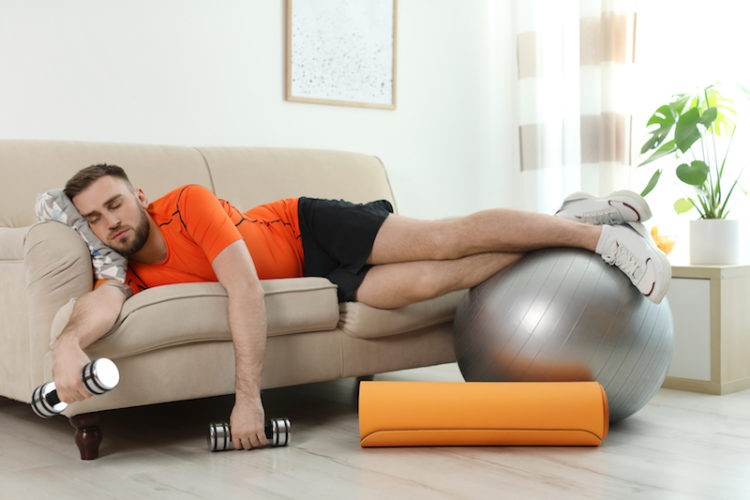
College may be a busy time for students and some key areas of life may get neglected in the rush. A common obstacle for students is finding the time to exercise in their daily lives. However, there seems to be a considerable number of students who make it a priority to exercise daily. The objective of this blog is to explore what motivates those individuals to maintain a healthy exercise schedule. With this, we looked at why people work out, conducted polls among peers, reviewed common goals of working out, examined models to gain motivation to work out, and tips to help one start implementing a healthy workout schedule.
We all know the benefits of exercising, but is knowing the impactful benefits of routinely moving our bodies enough to get us to the gym a couple of times a week? Why is it that only a certain percentage of college students exercise routinely? Does it depend on one’s personality to be motivated for this aspect? Does it depend on the barriers many college students face going to the gym? Is it a combination of both? These questions will be discussed in further sections.
The Basics
To set the foundation of this blog, let’s understand the basics of motivation. The definition of motivation can slightly alter from situation to situation. Motivation is a condition intrinsically that requires a change of condition (state of being/circumstances) that is accompanied by a desire to change whether that be intrinsic/extrinsic (Weaver, 2023). About our question posed, one could want to change their exercise lifestyle due to a desire that may be intrinsic (for example: to gain self-confidence)/extrinsically (for example: someone insults your looks) leading them to start making a change to their exercise lifestyle.
Why Do People Exercise?
It is clear that motivation is an important process for understanding health, looks, coping mechanisms, and social.
- Health
Being and staying healthy is a HUGE motivator for exercising! Going to the gym and working out may help us live longer and generally make us feel better. Being healthy is something everyone wants and strives for, so exercise, along with a healthy diet, is something people should do regularly
- Looks
According to our Instagram polls (which you will see later in the blog), college-aged students say they want to look better or be “more attractive” and that is a huge motivation for them to exercise more. Social media has had a huge effect on how people think they should look by comparing themselves to models, social media influencers, actors, etc.
- Coping Mechanisms
Everyone has diverse ways of coping. Whether it be eating, journaling, hanging out with friends, or in this case exercising. To some people, exercise is a release. It helps people relieve stress, anger, and even sadness. It makes them feel good and serves as a distractor for what is going on in their life.
- Social
Lastly, we have the social aspect. Some people go to the gym just to be around people and talk to them. It is a great way to meet people, make friends, and become gym partners who can then hold you accountable for working out.
Barriers to Exercise
Apart from one’s source of motivation, there are common barriers that people face that can limit motivation to exercise. For instance, many people cannot afford a gym membership, which thwarts their ability to exercise in a comfortable space and reduces their motivation to exercise in general. Regardless of the location in engaging in physical activity, whether it is at a public gym or exercising from the comfort of your own home, physical activity can still be seen as a chore for people. Studies show that having a positive mindset for exercise can enhance one’s motivation to prioritize an exercise routine over time (Schaefer, 2012). Furthermore, having certain personality traits could impact your mindset to exercise.
Personality in Motivation to Exercise
The Big Five Model of Personality highlights five prominent traits that define one’s personality, including extraversion, agreeableness, conscientiousness, neuroticism, and openness. Studies show that there is a positive correlation between extraversion and motivation to exercise (Lewis & Sutton, 2011). Having a strong personality trait of extraversion is associated with emotionality, assertiveness, and sensitivity to reward, all of which would be in favor of participating in physical activity. This also is related to many factors that correlate to the motivation of exercise such as participation and quality of performance in the exercise. Personality tends to be stable but other flexible differences can impact one’s motivation to exercise such as having a fixed mindset.
Growth vs. Fixed Mindset
Personality seems to be a stable and important factor for motivation, however, that is not the only factor dealing with the motivation to exercise. Having a growth mindset means you believe that things like your talents, intelligence, and other abilities can grow over time. On the other hand, a fixed mindset is believing that you are stuck with what you have and that you can never get better. Having a growth mindset would be the most beneficial for the motivation to exercise. Having a growth mindset will allow you to get the most out of working out. For example, let’s say you are doing a new weight on a machine and can’t get past 5 reps, instead of thinking “Well, I guess this is as good as it gets” and giving up, you will think “it’s okay, I’m going to keep trying because I can only get better.” This will help you stay motivated to continue the exercise because you have something to work for, and that is the gratification you will get from getting better.
Intrinsic and Extrinsic Motivation
There is research on whether the factors of intrinsic and extrinsic motivation play a role in motivation to exercise (Nicholosn et al., 2022). Intrinsic motivation is the motivation that is innate to us. Extrinsic motivation is motivation driven by the idea of receiving an external reward. Someone may have extrinsic motivation to work out, but it is not because they enjoy working out, but they enjoy the extrinsic rewards attached to exercising such as having a favorable body image and feeling healthy. To think about this more in-depth, someone who is extrinsically motivated to work out is going to experience more ego depletion as well as depletion of their self-regulation resources if engaging in an exercise they dread. Someone who is extrinsically motivated may feel more accomplished, as well as fulfilled for the rest of the day if they engage in a favored exercise. Therefore, someone extrinsically motivated is going to enjoy exercise at a more moderate level perhaps for a physical activity that involves self-regulation, the process in which individuals utilize control to execute their behavior consciously.
Self-regulation is controlled by many resources that help an individual stay focused and goal oriented. These resources are diminished when engaging in an activity that tests one’s self-control; this could be working out. To be progressive in a workout, a person needs to utilize self-control by investing in resources of self-regulation. Furthermore, exercising can potentially lead to depleting one’s ego by diminishing self-regulatory resources for the additional activities within their day. A study by ten Brummelhuis et al. shows that people who work out in the morning, typically before the workday begins, can enhance work focus and maintain self-regulatory resources for other subsequent tasks if there is a positive correlation between workout intensity and one’s motivation to exercise (2022). So, intrinsically motivated people, those who find enjoyment in exercising, can engage in intense workouts, and walk away from their workout session feeling fulfilled while still having adequate focus and attention throughout their workday. Those who are extrinsically motivated to exercise tend to have adequate focus throughout the day when exercising at a more moderate and reserved level. As stated earlier, people who are intrinsically motivated to exercise tend to find their motivation in loving the feeling of working out. People who are intrinsically motivated to work out are also most likely self-determined.
Self-Determination Theory
Self-determination theory is a framework of human motivation and personality that looks at intrinsic and extrinsic motivation. People with high levels of independence, capability, and relatedness arguably have enhanced motivation and engagement in activities and are able to present high-quality performance, and persistence in their goals or activities (Theory, 2023). When self-determined people decide to exercise, they enjoy the activity of exercise they are partaking in. When non-self-determined people engage in exercise, they are usually doing it for an incentive, or perhaps exercising to avoid guilt of not exercising. Enhanced levels of self-determined motivation can correlate to increased willingness and involvement with a routine of physical activity. According to Sweet et al., people with the three desirable traits of competence, autonomy, and relatedness can have enhanced levels of self-determined motivation (2012). Exercise can enhance levels of autonomy and competence aiding one to have self-determined motivation which is why it is important to establish a continuous routine in exercising to fulfill these needs.
TOTE Model
The TOTE Model is used to gain motivation to achieve a goal. TOTE: test, operate, test, exit, which are each step of developing a habit. In order to develop the goal one can ask: should I? What steps are needed? value? time demand? etc. Once the goal is determined one needs to break down the goal into a plan. Someone can do this by “if, then” statements, breaking it down into simpler steps, or using the atomic habit approach (develop a smaller step and build upon it once established). One also needs to factor in resources that will be needed to reach their goal with their process of reaching it (Weaver, 2023).
How One Could Implement the TOTE Model in relation to Motivation to Exercise
- Determine what your goal exercise lifestyle would look like (exercise 5 days a week for an hour)
- Start operating: this example will be using the atomic habit (for all steps continue until it feels established)
- Go two days each week for 30 minutes doing cardio.
- Go two days each week for 1hr adding in weights.
- Go two days for 1hr (doing cardio and weights) and 3 days for 30 mins(cardio).
- Go five days for 1hr (doing cardio and weights).
- Check to see if progress has been made toward your goal of exercising 5 days a week for 1hr, if not go back to operate
- If you have completed your goal of exercising 5 days a week for 1hr you may exit the TOTE model but keep your new goal in progress
- T: Test (Current state vs goal state)
- O: Operate (Do something to help reach the goal, this step can be repeated if needed)
- T: Test (Re-check current state vs goal state to see if changes have been made, this step can be repeated if needed)
- E: Exit (the goal has been reached and one can stop partaking in steps)
Instagram Polls
To better understand the college population’s opinions of motivation related to exercise we conducted an informal poll among our college peers on Instagram. We posed two questions: “When are you most motivated to work out?” and “What motivates you to work out.” The first question posed “When are you most motivated to work out” had three categories: morning, mid-day, and night. We averaged across three polls, giving the results: morning:33%, mid-day:19%, and night: 48%. The results from this may help someone find a time to work out when most other people are motivated to work out. The other question posed was “What motivates you to work out.” Due to the large variety of answers, we composed a chart to visually be more understanding.

Advice
Gathering the motivation to start exercising isn’t something that happens overnight. We recommend taking this journey slowly and not stressing out over it! Exercise can be a stress reliever, something that makes you feel better, so instead of thinking of it as a chore, think of it as a break where you can relax and just do your own thing. There are going to be times when you do not feel like going, and that is normal, do not let it discourage you! There is also going to be a point where you do not see the results that you want, which can be extremely discouraging. However, that is a part of the journey! You are not going to automatically get the results you want, so do not give up, take this step-by-step and cherish the little rewards that come!
References